
Solar · Storage · Flexible loads

Hybrid intelligence, brick by brick.

HyPBriQ uses research-grade models to turn uncertainty in solar, storage and flexible loads into decisions you can take to the board: where to build, how big, and what it earns.

Built on research-grade methods and research-based insights.
Quantifying uncertainty. Elevating confidence.

  1. Sizing 22% → 87% of a modelled solar surplus saved, once storage power and energy are sized together
  2. Technology 6 h → 30 h where the cheapest storage to build changes, using indicative investment costs
  3. Decisions 8.0 years discounted payback of a model 1 MW / 2 MWh battery. Change the inputs yourself

Sizing · one question, 16 answers

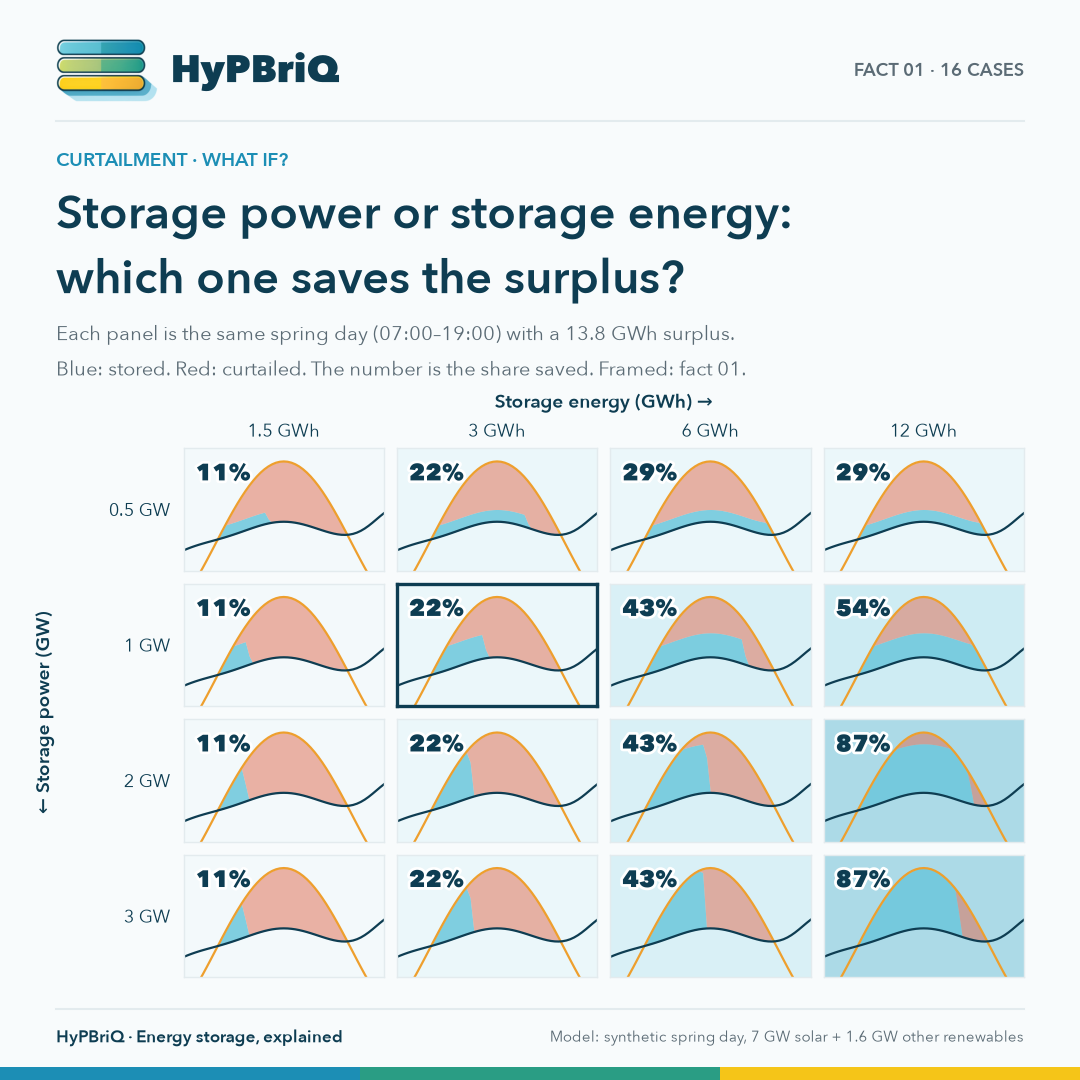
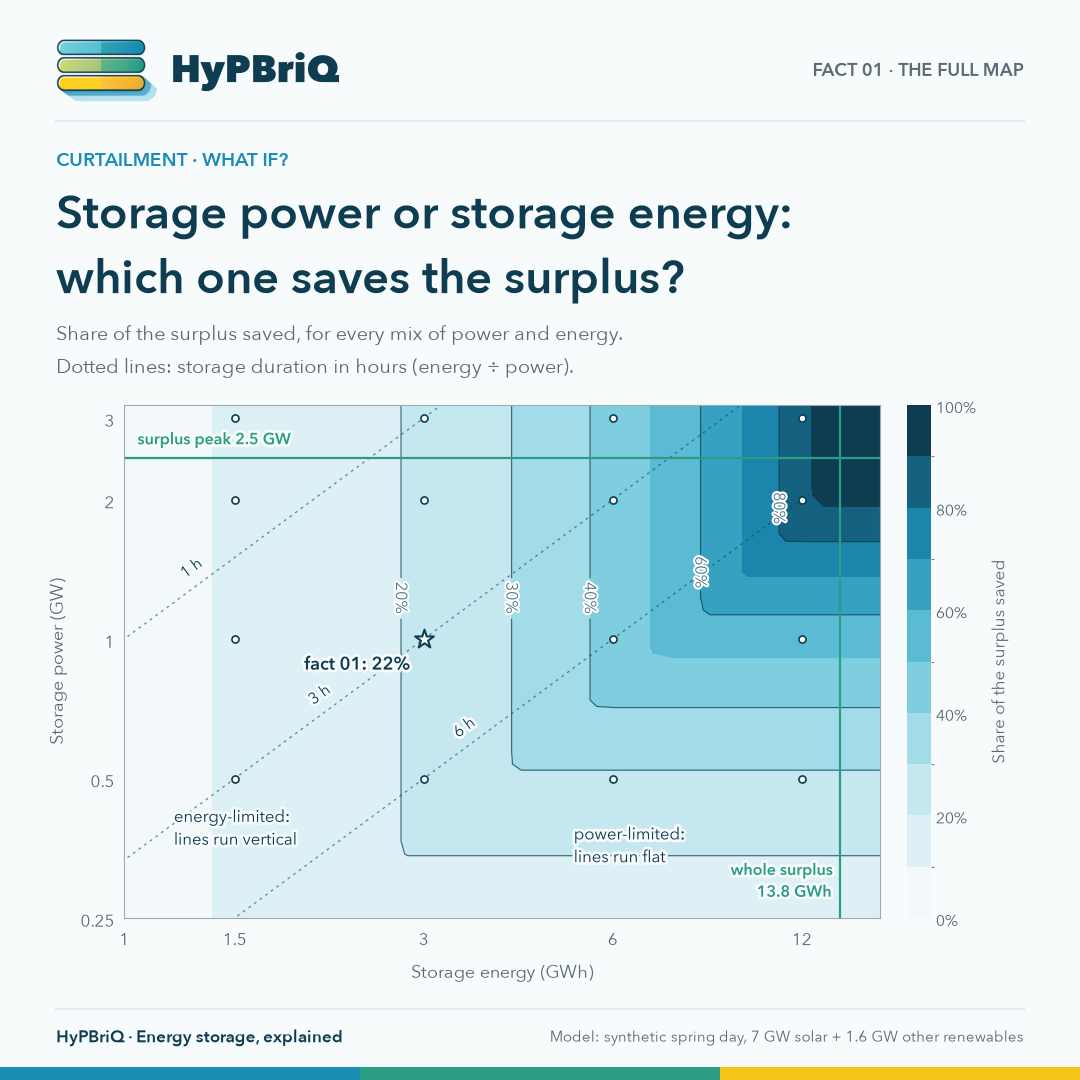
Storage power or storage energy: which one saves the surplus?

Both, and that's the trap. We ran the same spring day through 16 storage designs. Add megawatts or megawatt-hours alone and the result stalls.

Storage power
Storage energy
22%
  • Short of energy. At 1.5 GWh the answer is 11%, however much power you add.
  • Short of power. At 0.5 GW the answer stops at 29%, however much energy you add.
  • Sized together. 2 GW and 12 GWh save 87% of the 13.8 GWh surplus.
Grid of 16 charts of the same spring day. Share of surplus saved, by storage power and energy: at 0.5 GW 11, 22, 29 and 29 percent for 1.5, 3, 6 and 12 GWh; at 1 GW 11, 22, 43 and 54 percent; at 2 GW and at 3 GW 11, 22, 43 and 87 percent.
Blue: stored. Red: curtailed. Model: synthetic spring day, 7 GW solar + 1.6 GW other renewables.

What if? · try it

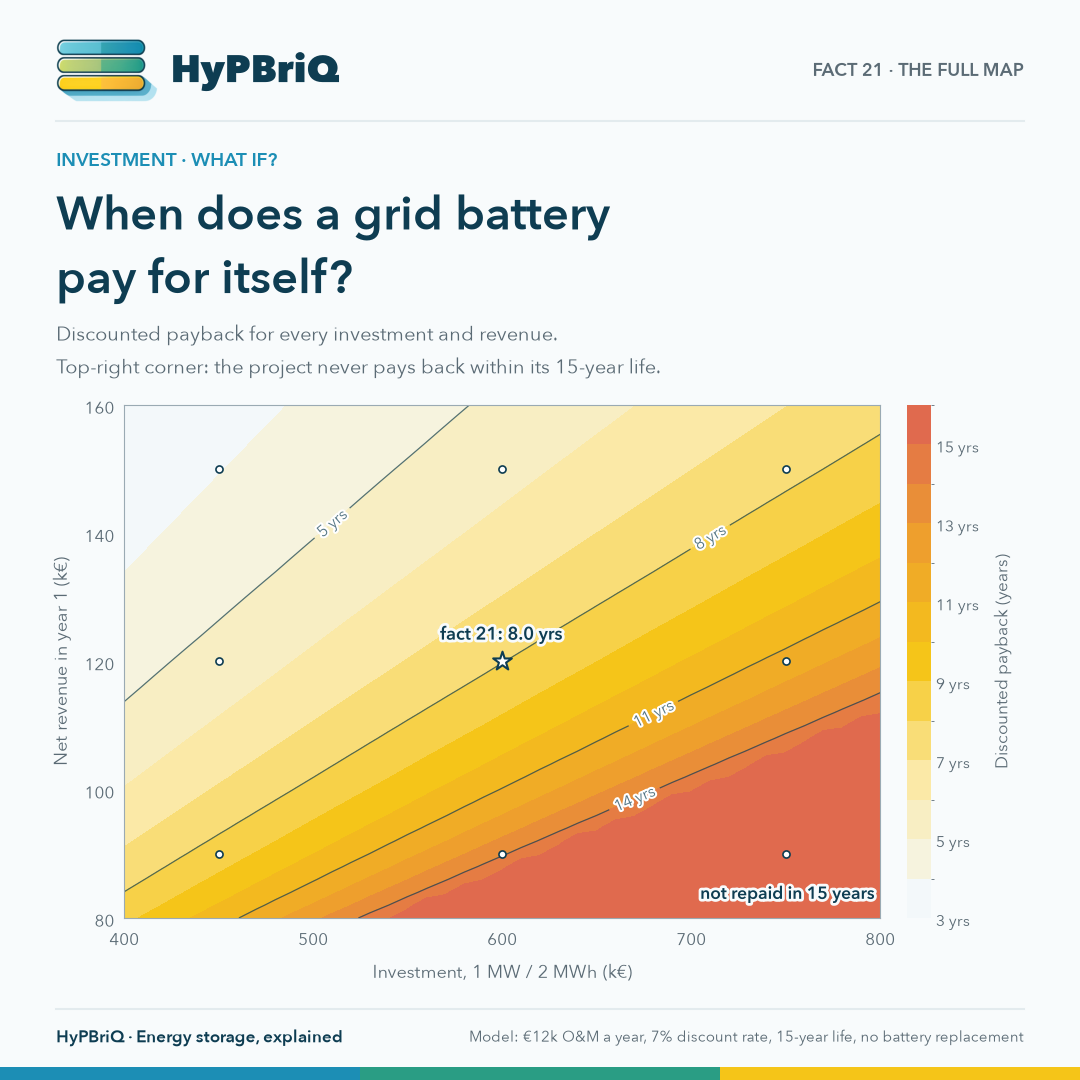
When does a grid battery pay for itself?

Move the two inputs that matter most. In the base case, a modelled 1 MW / 2 MWh battery pays back in 8.0 years after discounting, and revenue moves the result more than any other assumption.

Discounted payback
NPV
IRR
Simple payback
Cumulative discounted cash flow, €k

Model: net revenue is an assumption you set, not a measured result. It falls 2% a year in this model. €12k O&M a year, 7% discount rate, 15-year life, no battery replacement. Illustrative, not a forecast.

Technology choice

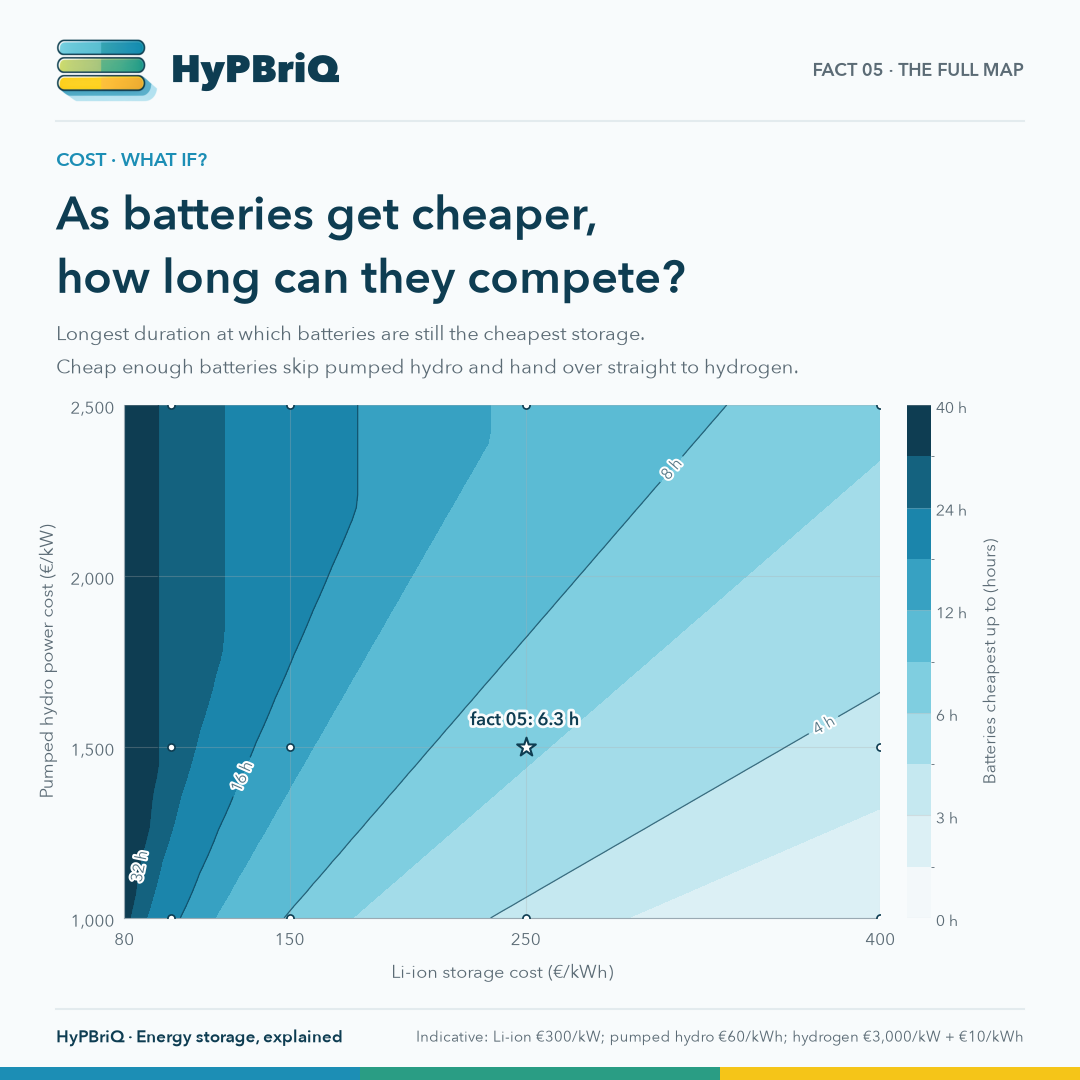
Which storage is cheapest to build?

It depends on how long you need to store the energy.

  • Batteries: cheap to install, but each extra hour adds a lot of cost. Cheapest up to about 6 hours.
  • Pumped hydro: costs more to install, but extra hours cost less. Cheapest from about 6 to 30 hours.
  • Hydrogen: costs the most to install, but extra hours cost very little. Cheapest beyond about 30 hours.

How many hours do you need to store?

Investment per kW of power

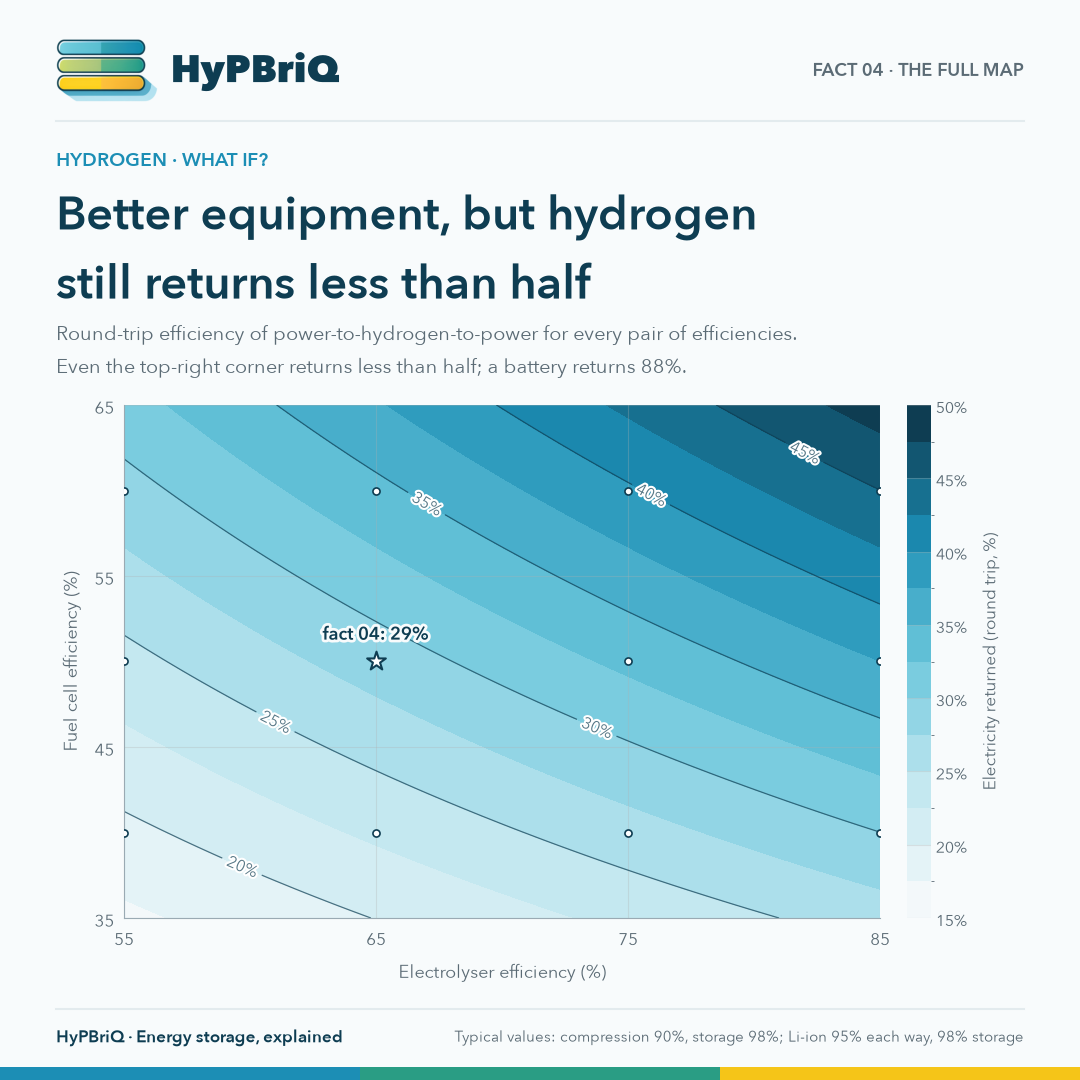
Indicative costs per kW: batteries €300 + €250/kWh, pumped hydro €1,500 + €60/kWh, hydrogen €3,000 + €10/kWh. Actual costs vary by project. This compares investment only. It leaves out energy losses, lifetime and running costs: for example, a Li-ion battery returns about 88% of the electricity stored, and hydrogen about 29%.

Research-based insights

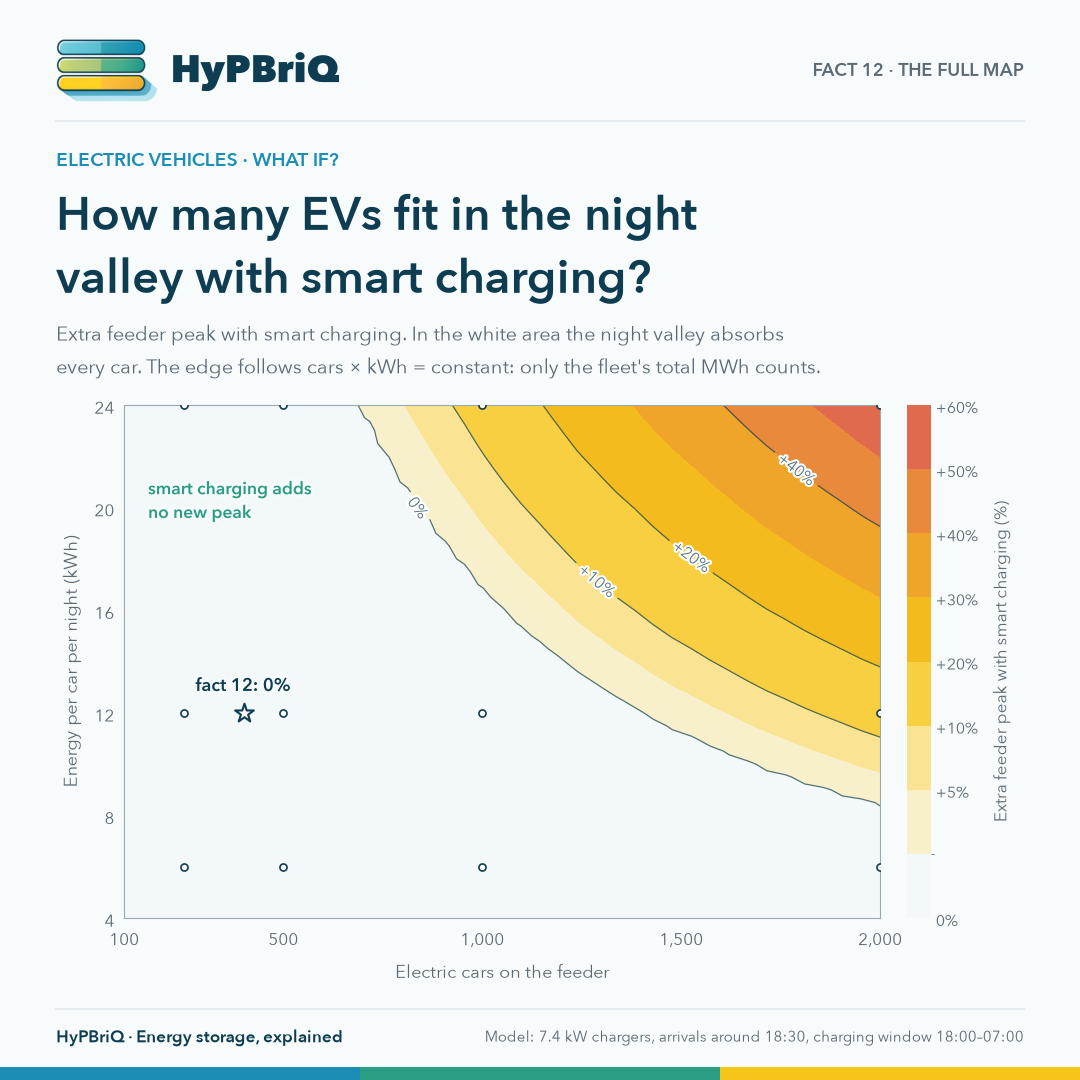
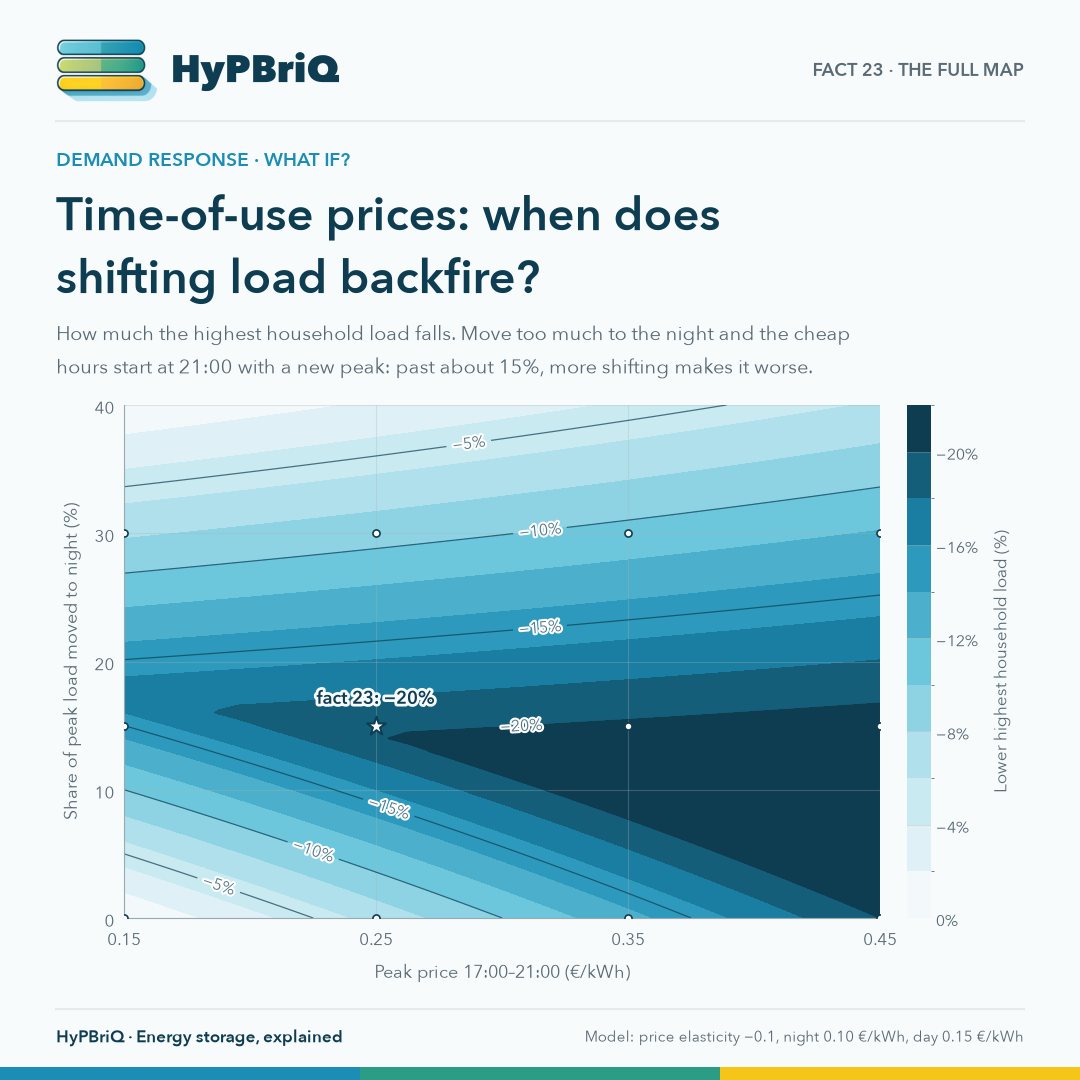
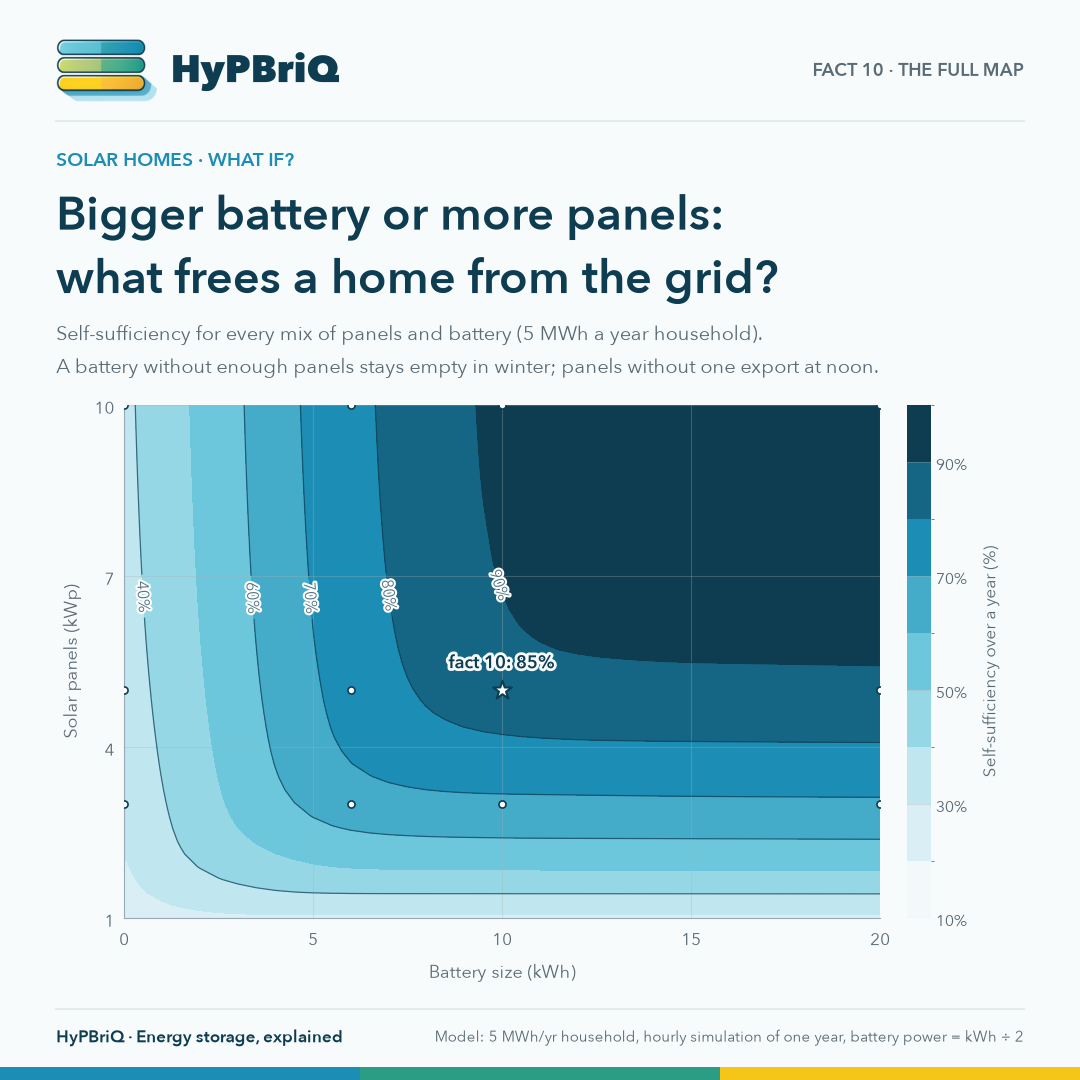
Twelve questions, every answer mapped.

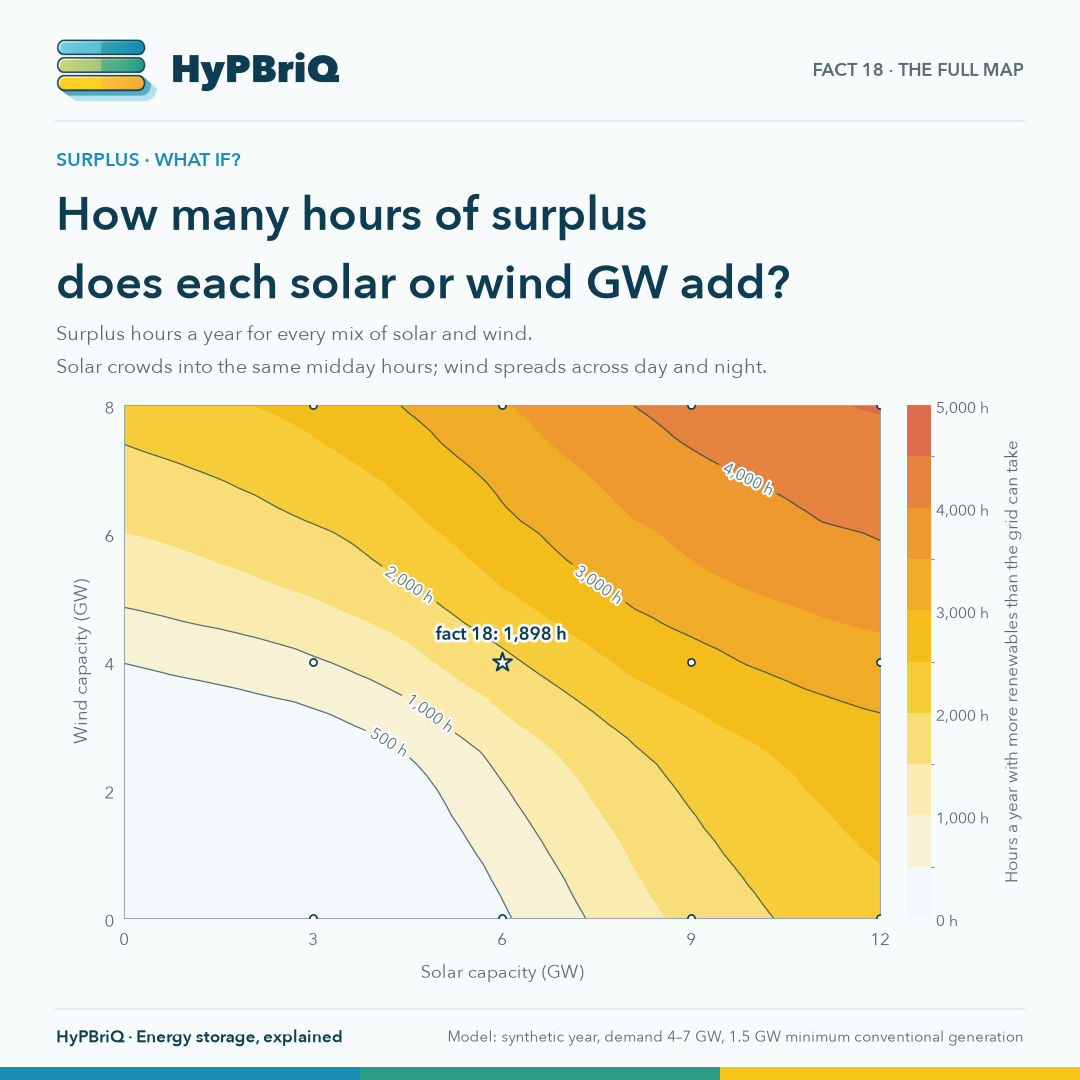
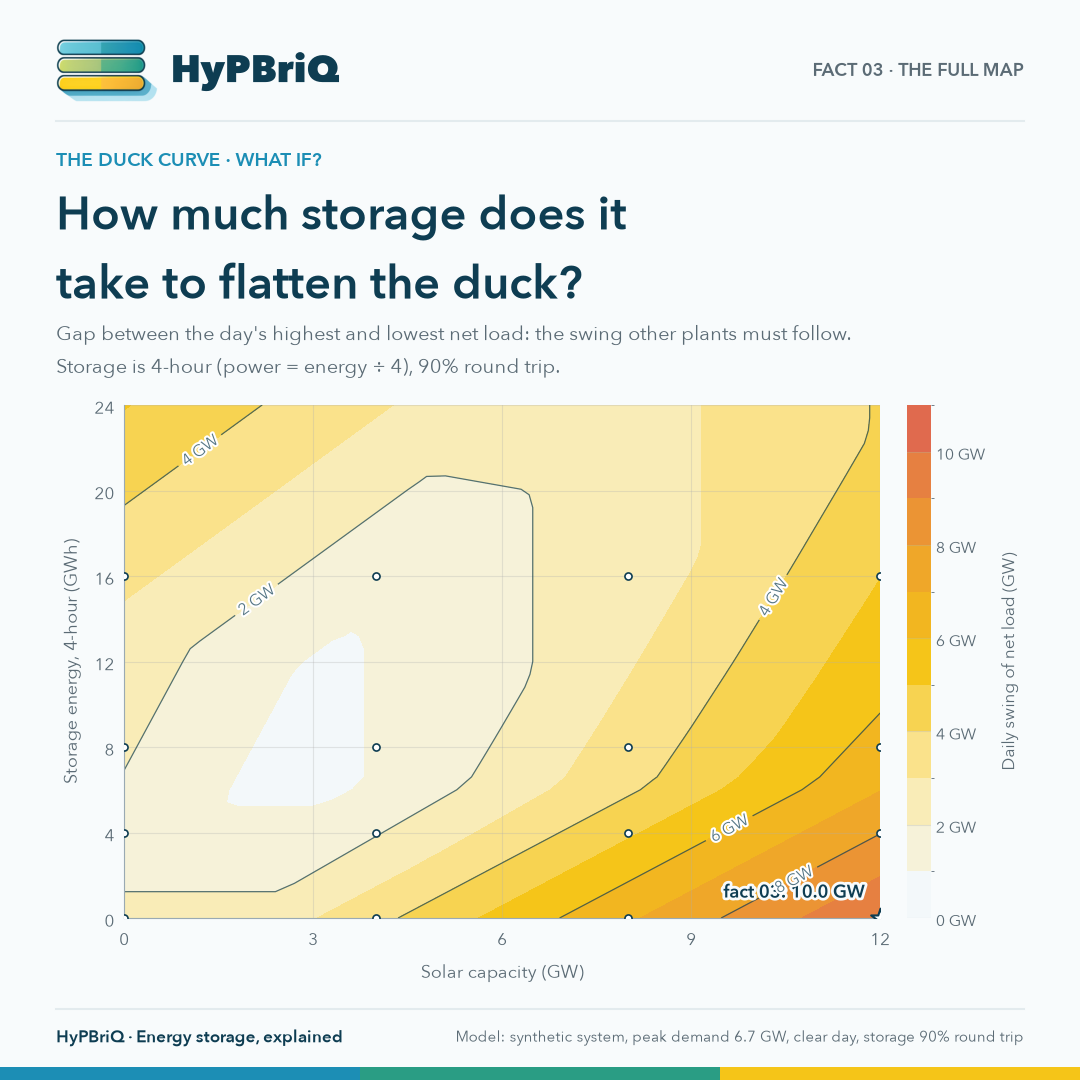
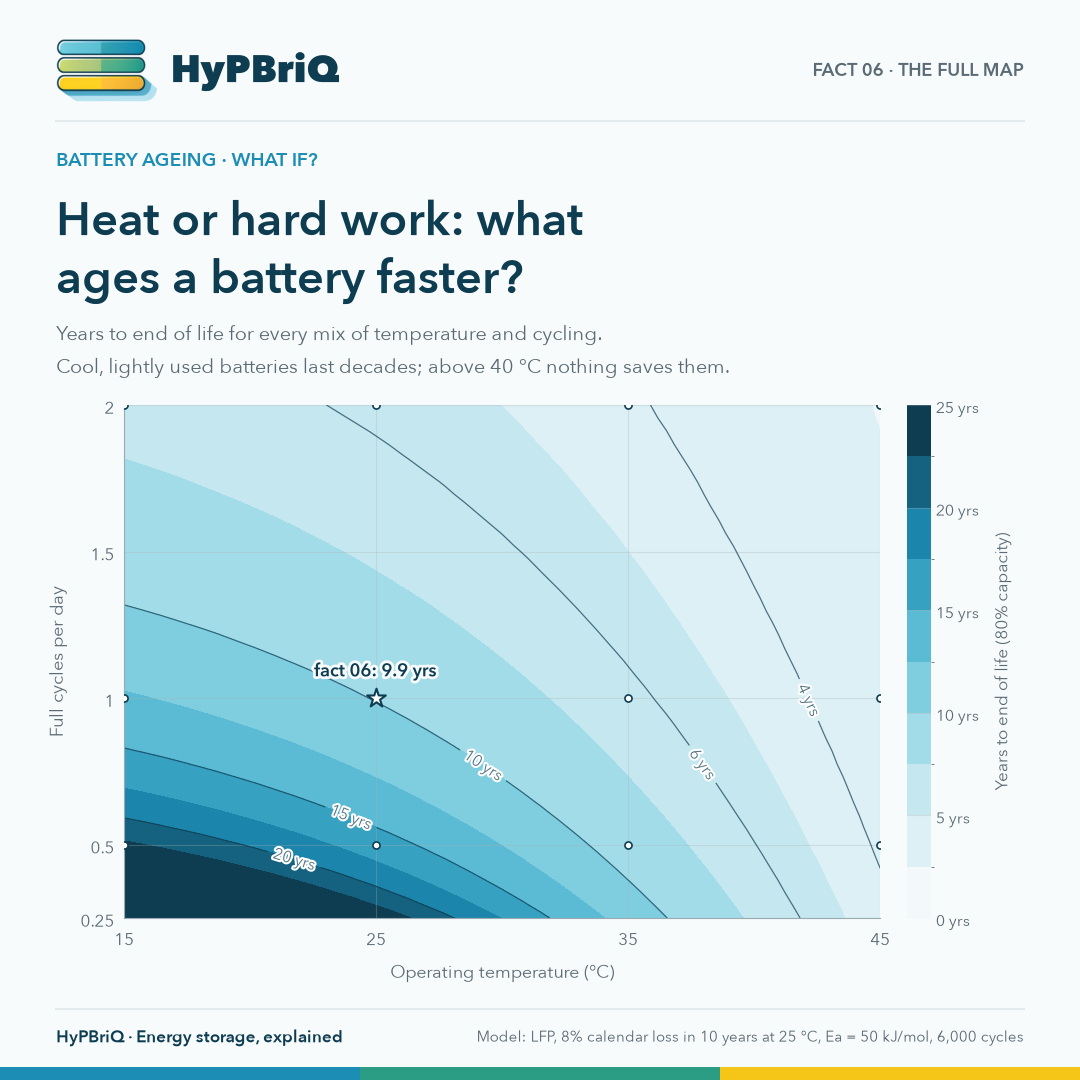
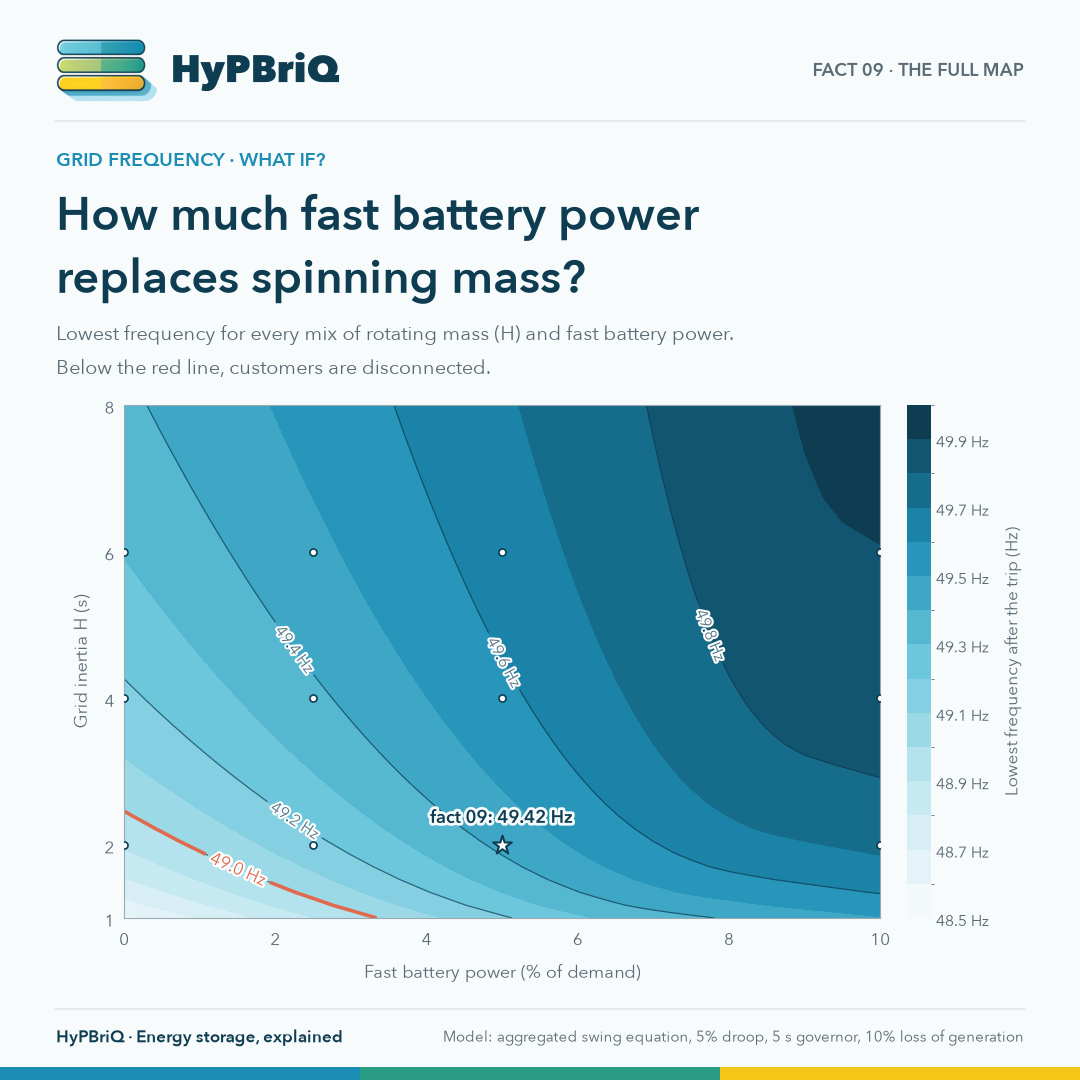
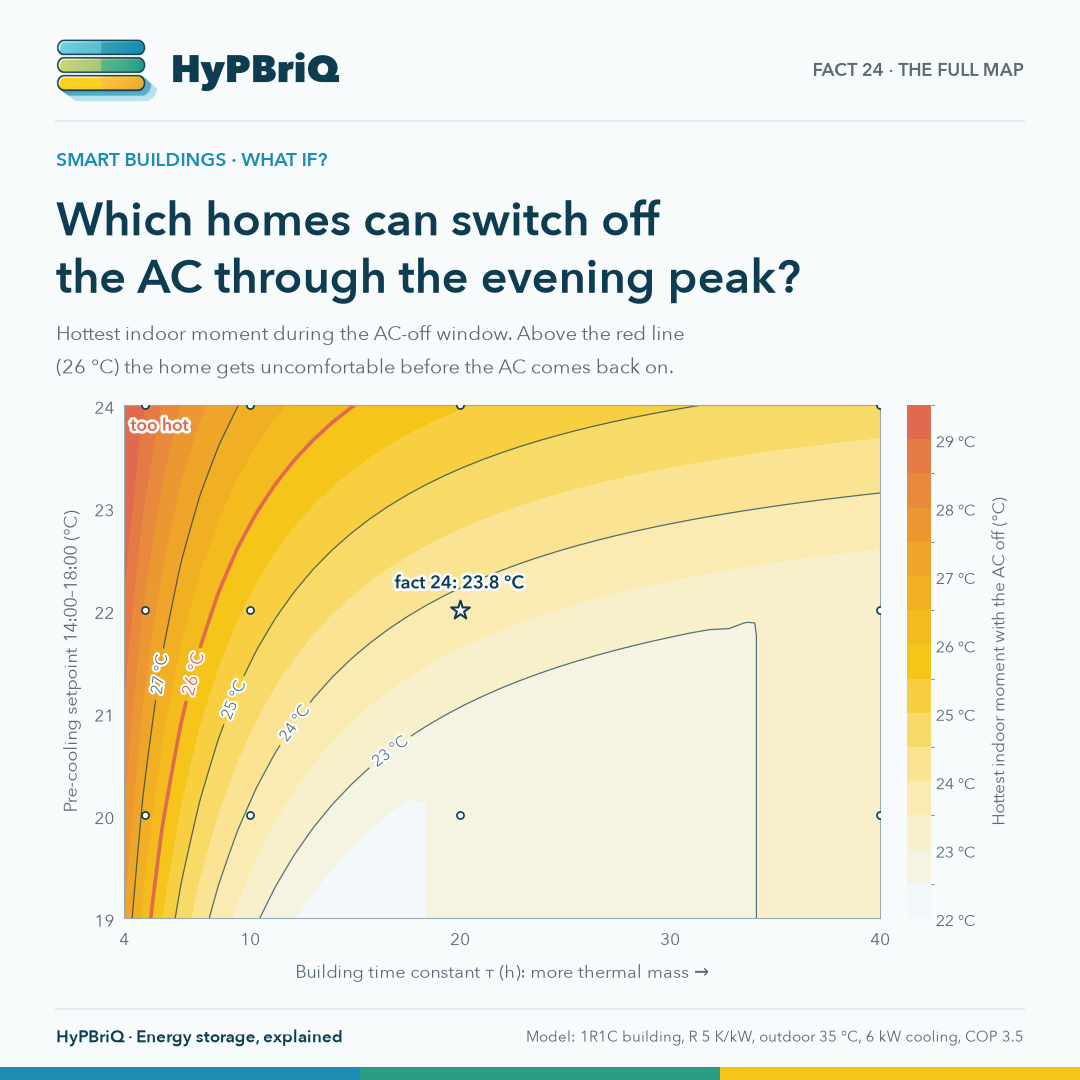
One data point rarely settles a decision. These parameter sweeps show where each answer holds and where it breaks. Open a card to see the map and its 16 cases.

All maps are illustrative HyPBriQ models. Each states its assumptions in its footer.

Advisory · optimization · execution

Services that move projects forward.

We help energy, industrial and infrastructure clients turn technical uncertainty into investment-grade decisions, operational savings and new revenue streams.

Before you invest

For projects that need a rigorous case before capital is committed.

  • Feasibility and sizing for PV and BESS, from site load profiles, space, tariffs and operating constraints.
  • Financial modelling and ROI: CAPEX, OPEX, NPV and payback under different regulatory and market scenarios.

Assets you already own

For owners who want more value from what is already installed.

  • Underutilized asset optimization: find hidden capacity and remove efficiency bottlenecks.
  • EMS evaluation: benchmark actual performance against the model and unlock trapped value.

Operations and revenue

For operators turning flexibility into savings and income.

  • Load and BESS dispatch optimization, around shifts, machinery, PV generation and low-tariff windows.
  • Revenue stacking: grid services, demand response, frequency response and arbitrage.

Models you keep

For teams that want the capability in-house.

  • Custom offline optimization models with a practical interface. They run locally and stay with your team permanently.

Decision-ready delivery

For teams bridging analytics, operations and investment.

  • Clear recommendations, board-friendly summaries and the technical evidence behind them.
  • Secure integration with your data sources, operational systems and reporting workflows.

In development

The HyPBriQ Portal

We're building a browser workspace for European power market intelligence, without waiting for a custom report. It isn't open yet. Planned features:

  • Market map of day-ahead prices across Europe.
  • Analysis: yearly, year vs year, generation mix, correlations.
  • Business case: capture prices, battery window, battery ranking, project builder.
Hear when it opens →

About

Academic depth, practical delivery.

HyPBriQ was founded by Dr. Panagiotis Barmpoutis, an award-winning data scientist and AI engineer, and an elected Assistant Professor in the Department of Mechanical Engineering at the International Hellenic University.

The team includes experienced engineers and specialists who combine advanced data simulation with practical operational strategy, to de-risk renewable investments, optimize dispatch and turn complex energy systems into high-yielding assets.

  • Top 2% of scientists worldwide, Stanford University / Elsevier 2025 list
  • Hands-on experience at Imperial College London, University College London, the Babraham Institute and Pulsar Power
  • No black boxes in any model, with every assumption stated so you can challenge it

Contact

Bring us the question you can't settle yet.

Share your project context and we'll help quantify and mitigate the risk.

We use your details only to reply to this enquiry. See our privacy notice.